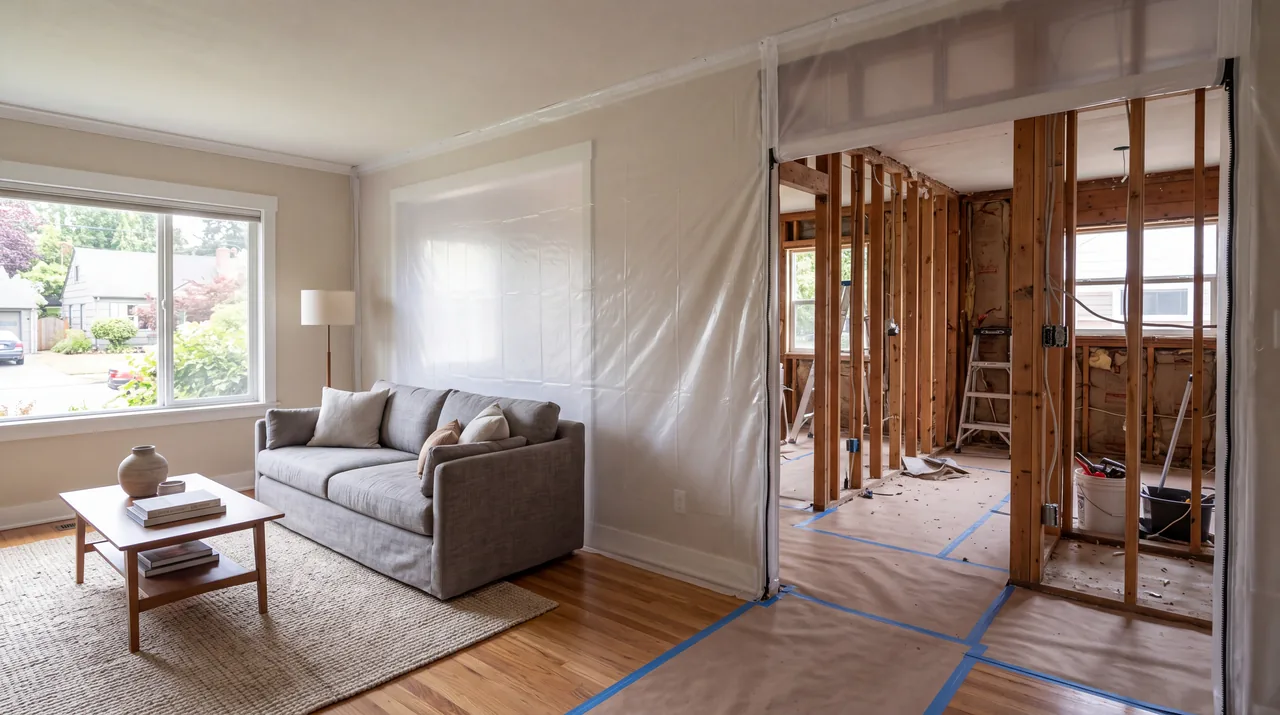
For most whole house renovation projects, we recommend moving out if the work hits the kitchen, more than one bathroom and the mechanical systems at the same time. Stay only if the job can be split into phases that always leave you a working bathroom, somewhere to cook and a sealed room to sleep in. If a big project is on your list for next year, the holidays are a good time to decide, because the answer changes the schedule, the budget and how the crew sets up on the first day.
Here's how the two choices compare on the five things that usually settle it.
Living in versus moving out, side by side
| Factor | Living in | Moving out |
|---|---|---|
| Dust | Controlled with barriers and covered returns, but some always gets through | Contained to the house, cleaned before you return |
| Safety | Open walls, tools and shutoffs share space with your family and pets | Hazards stay on the job site |
| Schedule | Work is limited to sealed zones and planned around you | Trades can work several areas at once in a natural order |
| Cost exposure | Extra protection, cleanup, meals out and some nights away | Rent, storage and moving twice, and rent grows if the job runs long |
| Sanity | Noise, strangers and no kitchen, every day | Disruption of a move, but quiet evenings |
What each factor looks like in practice
Dust
Drywall sanding dust is fine enough to ride the air through a forced-air system. A good setup uses zippered plastic barriers at doorways, sealed or covered return vents in the work zone, floor protection along the path the crew walks, and filtered air movement where practical. That cuts dust a lot. It doesn't stop it. If anyone in the house has asthma or a respiratory condition, treat that as a strong vote for moving out, and plan to change the furnace filter when the dusty work ends.
Safety
Older houses carry real risks once walls and floors open up. The EPA's Renovation, Repair and Painting Rule applies to homes built before 1978 because of lead-based paint, and the Colorado Department of Public Health and Environment publishes the state's rules on asbestos, which can show up in old ceiling texture, flooring and duct wrap. Read their guidance before demolition starts. Beyond that, a gutted house has open stud bays, temporary wiring, stair openings without rails, nail guns and days when the water or gas is off. Young kids and curious pets make living in harder to do safely. Keep smoke and carbon monoxide alarms working the whole time, and ask the local building department what alarm upgrades your permit triggers, since they have the final word on code.
Schedule
When you live in, crews set up and break down protection around your routine, and only one or two zones can be open at once. Shutoffs have to be planned so you aren't without a toilet overnight. That stretches the job. Moving out lets the electrician, plumber and HVAC installer work across the whole house in the order the work wants, which is usually faster and cleaner. The one advantage of staying is that you're right there when a question comes up.
Cost exposure
Neither option is free, and the risks are different. Moving out means rent or a short-term lease, possibly storage, moving out and back, and paying utilities in two places. The bigger exposure is time: if the project slips, your rent keeps running, so look for a lease with flexible terms. Living in means more protection material, more daily cleanup, more meals out and a few hotel nights when the water is off or the floors are being finished. Ask your builder to spell out in writing what protection and cleanup are included.
Sanity
This is the one people underestimate. Saws start early. Workers come and go through your front door. If you work from home, take calls in the house, or host family over the holidays, a live-in renovation will wear on you. Be honest about how your household handles disruption, because a frustrated owner makes slower decisions, and slow decisions cost more than a few months of rent.
Who should stay and who should go
- Stay if the house has enough room to keep a full bathroom, a sleeping area and a temporary kitchen out of the work zone.
- Stay if the work can be phased so the house is never torn open everywhere at once.
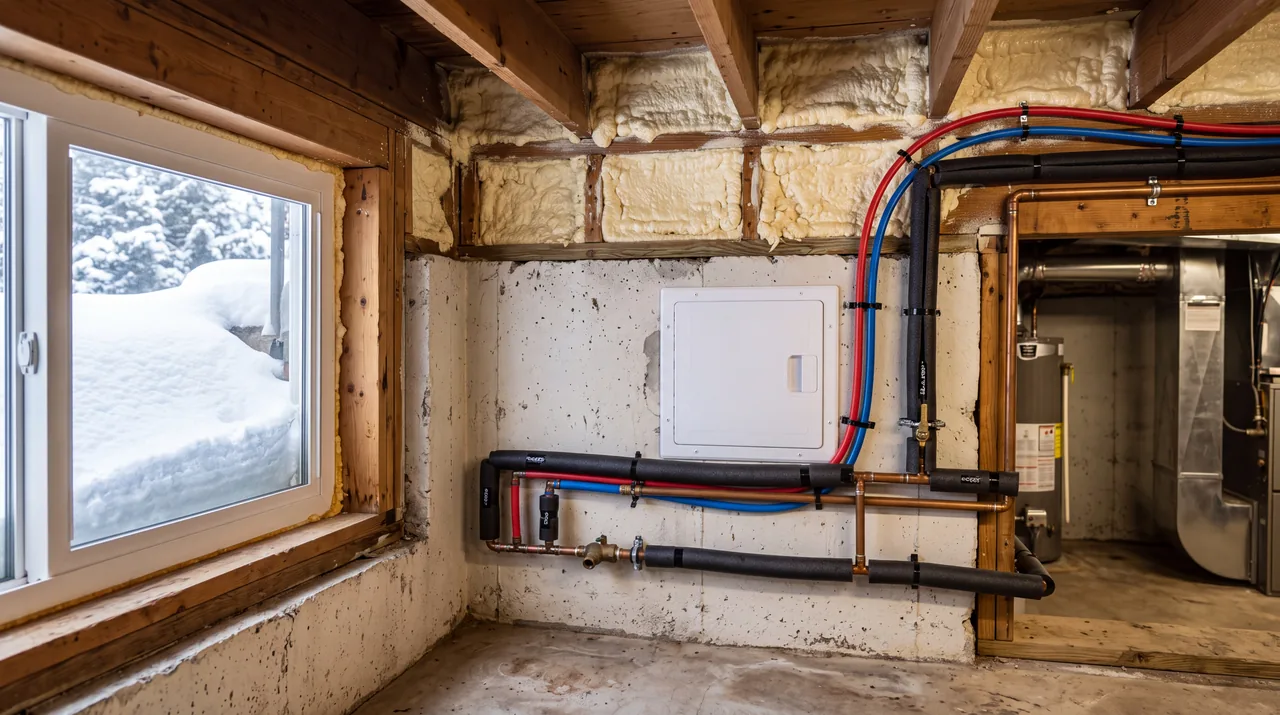
- Move out if the plan replaces the electrical panel, re-pipes the plumbing or swaps the heating system across the whole house.
- Move out if you have infants, someone with breathing problems, or a pre-1978 house with lots of painted surfaces being disturbed.
- Move out if the kitchen and every bathroom are being redone together.
Renovation phasing in plain words
Here's a common way to phase a two-story house with a kitchen, a primary bath, a hall bath and secondary bedrooms upstairs. It's an example, not a promise of how your house will go.
Phase one is the upstairs hall bath and the secondary bedrooms. You still have the kitchen and the primary bath, and the crew works behind a barrier at the top of the stairs.
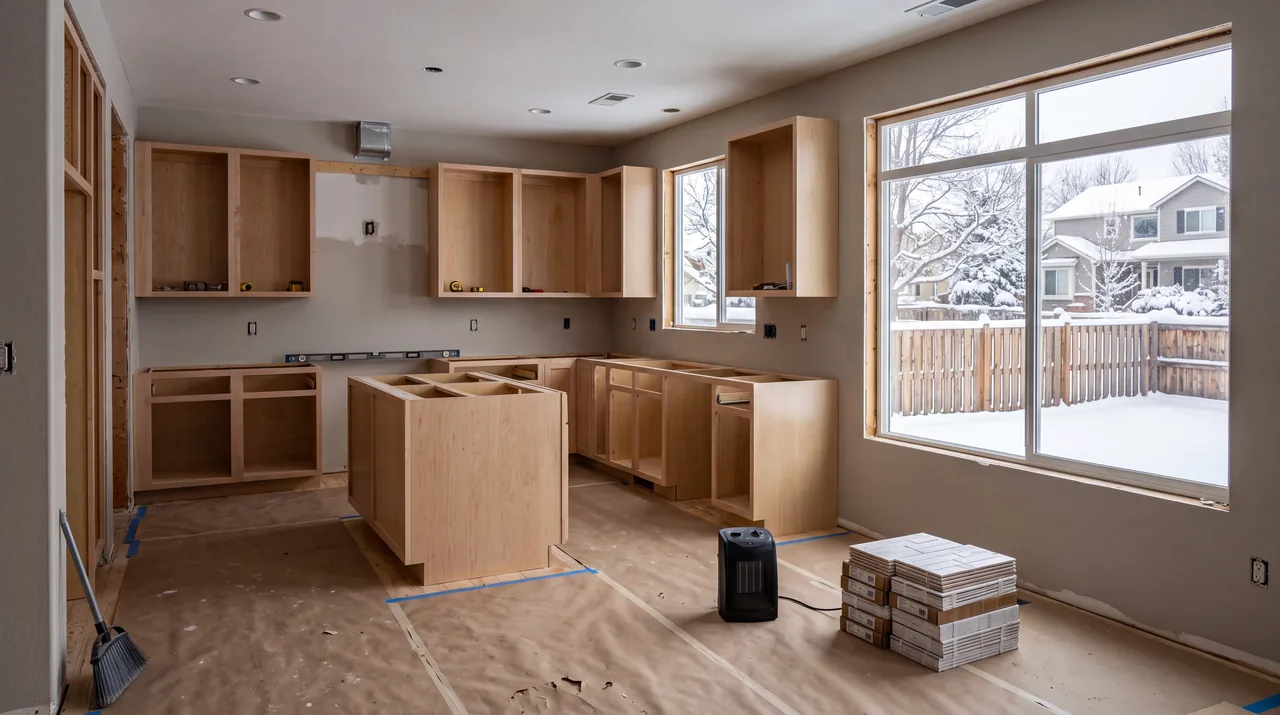
Phase two is the kitchen and main living area. You set up a temporary kitchen in the dining room or garage: the old refrigerator, a microwave, a countertop induction burner and, if the plumber can rig one, a utility sink. The new hall bath is done, so you shower upstairs. If the kitchen is the heart of your project, our page on how we handle kitchen remodels covers the planning side.
Phase three is the primary bath. The family uses the finished hall bath.
Phase four is the outside: roofing, siding, windows and the deck. Most of that work happens from the exterior, so it's the easiest phase to live through.
Some work won't phase neatly. A panel upgrade, a new furnace and ductwork, or refinishing connected wood floors affects the whole house at once. Plan those for a stretch when you're away, even if you live in for everything else.
Phasing also creates seams where finished rooms meet rooms still to come: trim that has to line up, flooring that has to tie in, paint that has to match. That's where our approach to where materials meet matters most, because those transitions are what you notice for years. If you want to see how a full project is planned from start to finish, read about our whole-home renovation service.
Thinking about next year? Tell us about the house and how you live in it.